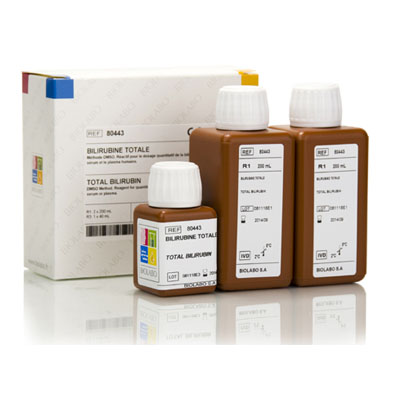
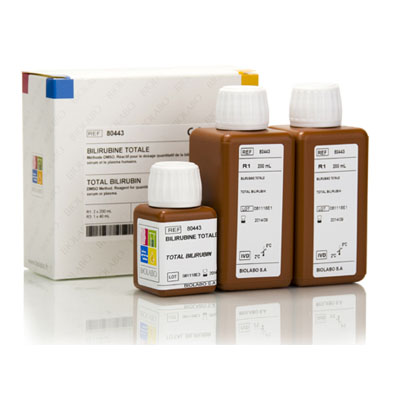
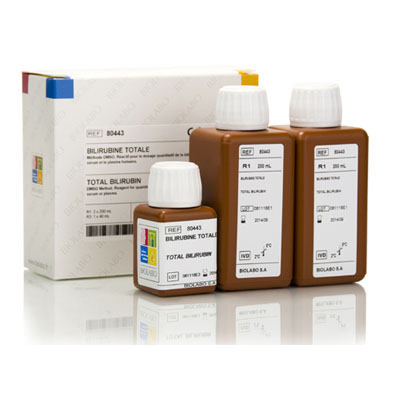
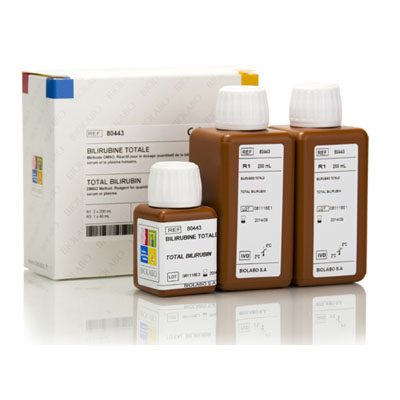
Cromatest Phospurus UV With Std. Biochemistry Reagent
Packaging Size: ( 2×50 ) ml
Origin: Spain
Brand : Cromatest / Linear
Packaging Type: Bottle
Test/Pack: 100Test
Method: INORGANIC Colorimetric method

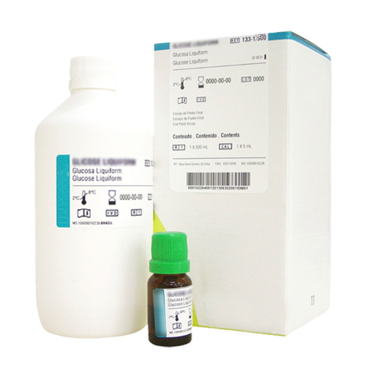
Packaging Size: ( 2×50 ) ml
Origin: Spain
Brand : Cromatest / Linear
Packaging Type: Bottle
Test/Pack: 100Test
Method: INORGANIC Colorimetric method
Inorganic phosphate reacts with molybdic acid forming a phosphomolybdic complex. Its subsequent reduction in alkaline medium originates a blue molybdenum colour which intensity is proportional to the amount of phosphorus present in the sample.
R1:Molybdate Reagent. Ammonium molybdate 7 mmol/L, sulphuric acid 0.8 mol/L. Xi R:36/37/38
R2: Reducing solution. Hydroxylamine 0.64 mol/L. Catalyzers.
R3: Color developer. Sodium hydroxide 3 mol/L. Stabilizers. C R:35
CAL: Phosphorus standard. Phosphorus 5 mg/dL (1.6 mmol/L) Organic matrix based primary standard.
STORAGE AND STABILITY:
Store at 15-30ºC.
The reagents are stable until the expiry date stated on the label.
Working reagent. Mix 1 volume of R1 + 1 volume of R2. Stable for 8 hours at 2-8ºC protected from light.
Serum or heparinized plasma separated from cells as soon as possible, and urine (see Notes).
The phosphorus in serum or plasma is stable for 7 days at 2-8ºC. Freeze for longer storage.
Phosphorus in acidified samples of urine is stable for about 6 months at 2-8ºC.
Pipettes to measure reagent and samples

PROCEDURE:
| TUBES | Blank | Sample | Standard |
| Working Reagent | 1.0 mL | 1.0 mL | 1.0 mL |
| Sample | – | 50 mL | – |
| Standard | – | – | 50 mL |
Mix, let stand the tubes for 1 minute and then pipette:
| Developer | 0,5 mL | 0,5 mL | 0,5 mL |
The color is stable for at least 30 minutes protected from light.
Serum, plasma ASample
Samples with concentrations higher than 15 mg/dL (4.8 mmol/L) should be diluted 1:2 with saline and assayed again. Multiply the results by 2.
If results are to be expressed as SI units apply:
mg/dL x 0.323 = mmol/L
Serum, plasma
| Children | 4.0-7.0 mg/dL (1.29-2.26 mmol/L) |
| Men | 2.5-4.5 mg/dL (0.81-1.45 mmol/L) |
| Women | 1.5-6.8 mg/dL (0.48-2.19 mmol/L) |
Urine
0.4-1.0 g/24-h (12.9-32.3 mmol/24-h)
It is recommended that each laboratory establishes its own reference range.
recommended to rinse glassware in diluted nitric and distilled water before using.
The use of a standard to calculate results allows to obtain an accuracy independent of the system or instrument used.
To ensure adequate quality control (QC), each run should include a set of controls (normal and abnormal) with assayed values handled as unknowns.
Phosphorus and calcium metabolism are interwined. In healthy persons, as serum calcium levels rise, those of phosphorus fall. Control of phosphorus levels is in part accomplished by regulation of renal excretion. However, fairly rapid fluctuations in serum inorganic phosphate can occur because the serum inorganic phosphate concentration is influenced by carbohydrate metabolism.
In diabetes, severe loss of phosphate is possible, since carbohydrate metabolism is deranged and phosphate tends to pass from the cell into extracellular fluid and then into plasma. It is then extracted and excreted by the Kidney.
Increased levels are associated with hypoparathyroidism, during insulin treatment of diabetic coma, and with chronic nephritis rising as renal failure progresses.
| mg/dL | Within-run | Between-run | ||||
| Mean | 2.5 | 12.9 | 20.2 | 2.5 | 12.9 | 20.2 |
| SD | 0.07 | 0.3 | 0.2 | 0.08 | 0.35 | 0.41 |
| CV% | 2.8 | 2.3 | 0.75 | 3.2 | 2.7 | 1.54 |
| N | 5 | 5 | 5 | 5 | 5 | 5 |
Replicates: 5 for each level. Replicates: 5 for each level Instrument: UVIKON 930 for 8 days.
N = 20 r = 0.978 y = 1.184x + 1.22
W.B. Saunders Co. Philadelphia, PA. (1995